RF & Wireless Systems · Hardware
Wireless Crane Control System
Encrypted RF link, millions of operations in the field.
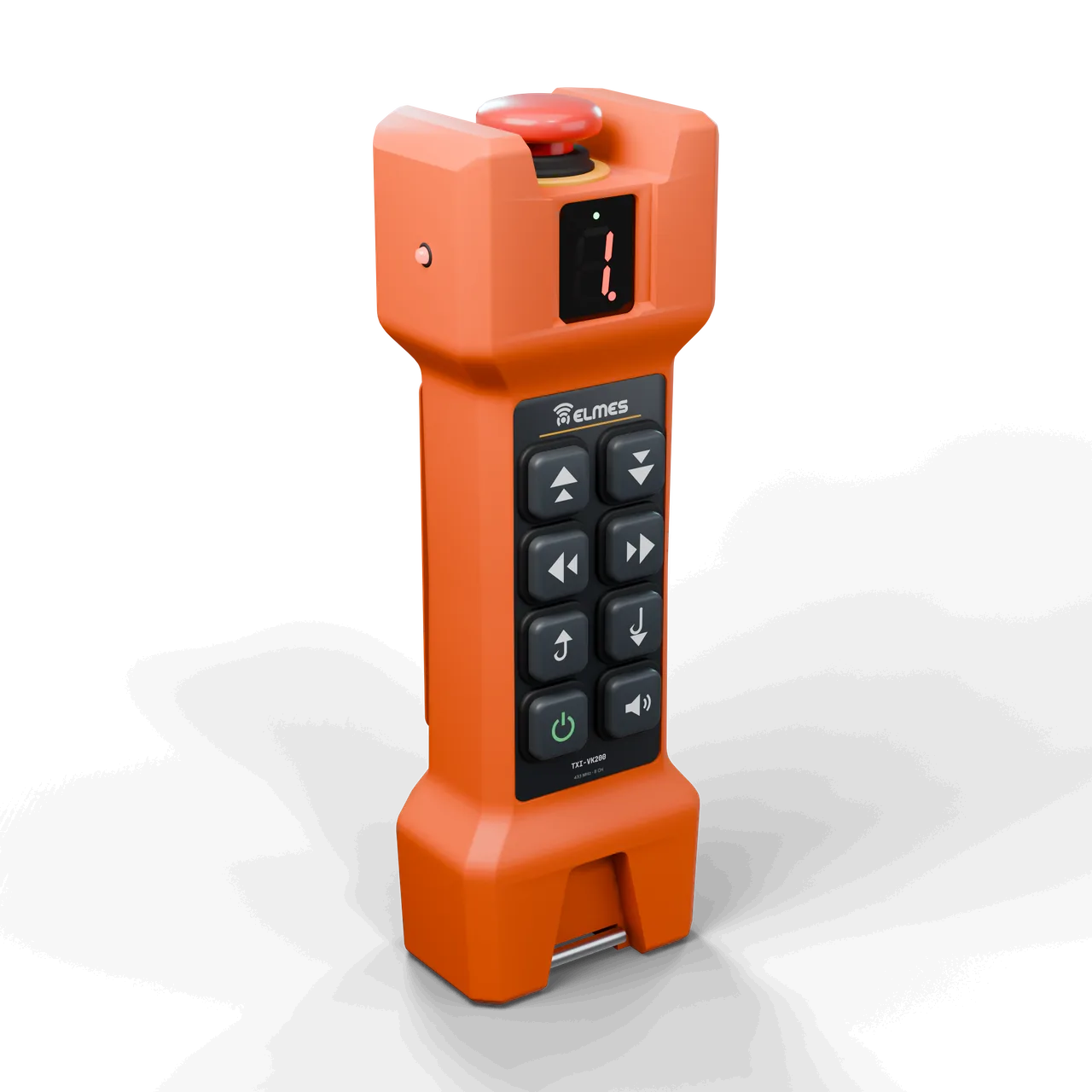
Overview
The problem in the field. On overhead cranes, a pendant control ties the operator to the area under the load and to the line of travel; festoon cable systems suffer from breaks, crushing and connection faults, and every fault means a production stop. Imported wireless remotes come with a fixed button layout, special functions (analog speed, extra relays, interlocks) cannot be added, and service is abroad. When several cranes work in the same plant, remotes triggering each other is a safety risk.
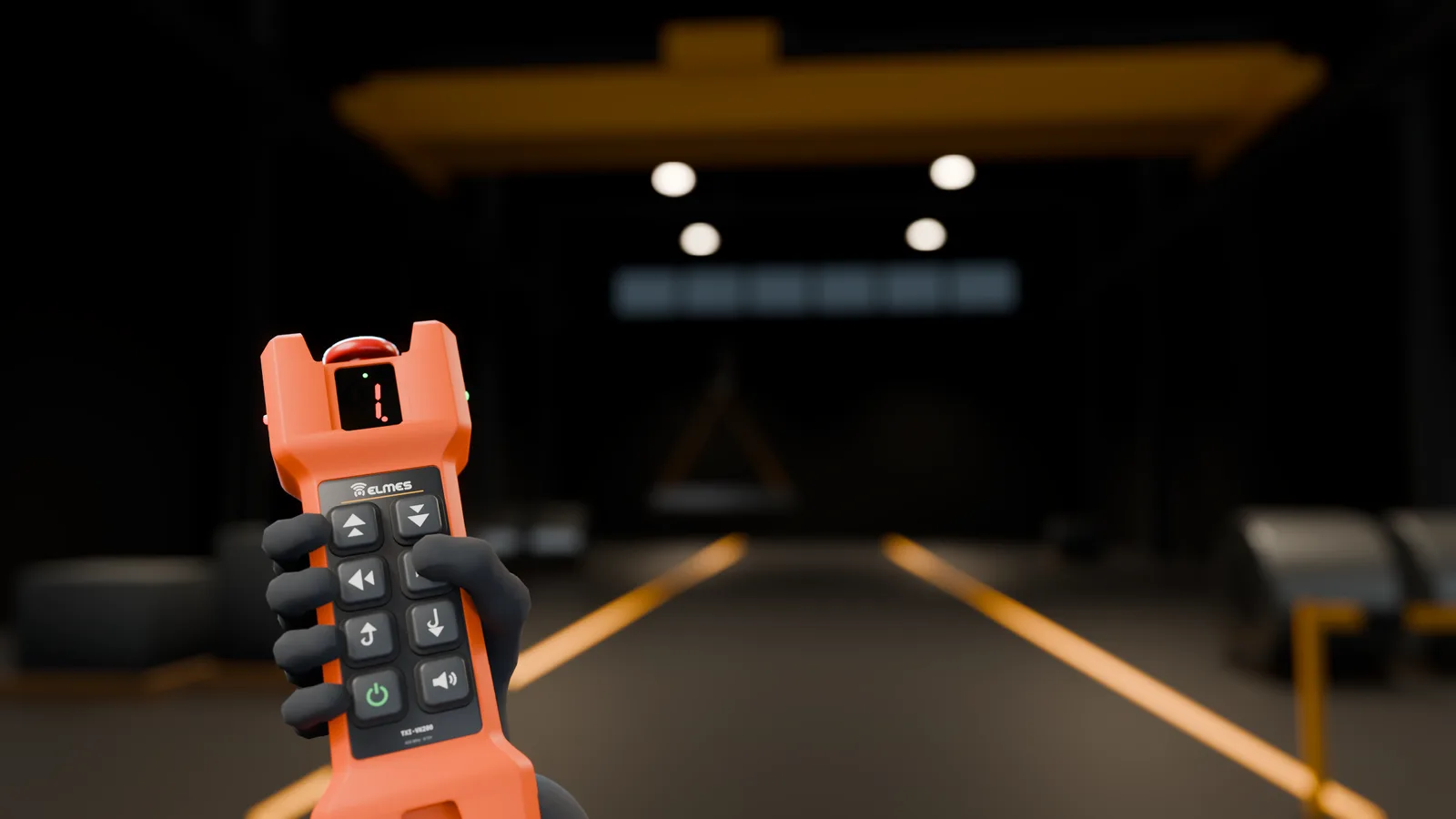
The solution. The Elmes crane control system carries commands from a handheld or belt-pack transmitter to the receiver in encrypted RF packets; the receiver's relay contacts connect directly to the contactors or drives. Every system has a unique ID, so transmitters with a different ID cannot affect the receiver. The emergency stop command is processed with priority; if the link drops or the battery runs out, the receiver releases its relays to a safe state. The operator controls the load from wherever they see it best.
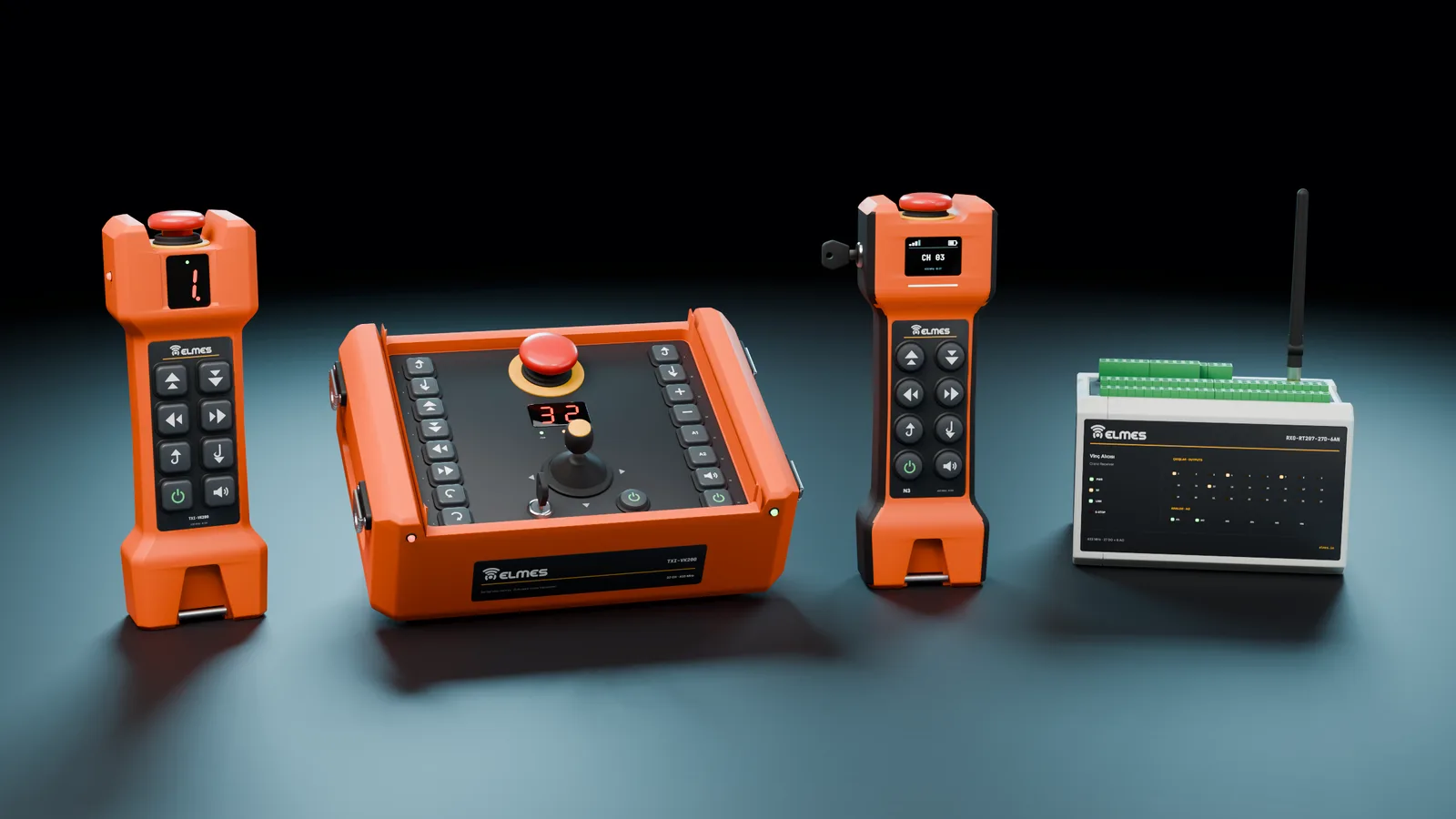
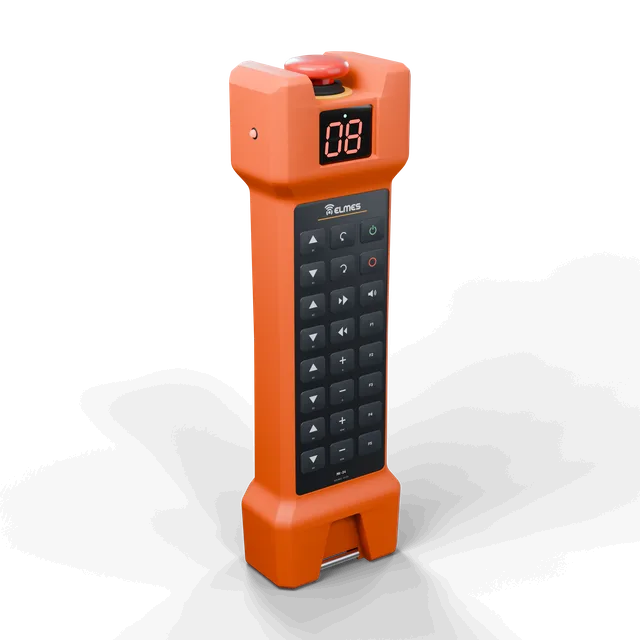
Customization. 6–32 channels, two-speed buttons, joystick/analog speed, analog 0/4–20 mA and 0–10 V outputs (up to a receiver with 27 digital + 6 analog outputs), latch/momentary selection and reverse-button protection are configured per application. For non-crane machines such as concrete pumps, horizontal lifts and doors/barriers, the same hardware is offered as Wireless Machine Start & Control.
Features
- Emergency stop (E-Stop): mushroom button on the transmitter; a priority command that opens all relays on the receiver.
- Two-speed buttons: low/high speed with a two-stage press.
- Analog / joystick control: analog or digital joystick; 0/4–20 mA and 0–10 V analog transfer; 6 analog outputs on the receiver.
- Latch / momentary selection: latching or hold-to-run operation per channel.
- Pilot relay and reverse-button protection: opposite-direction interlock; forward and reverse cannot run at the same time.
- On/off lock: key-switch or code-protected start.
- Automatic signal cut-off on low battery plus charge/transmit LEDs.
- OLED display: optional.
- Multiple transmitters: more than one remote can be paired to the same receiver.
- TargetOn-screen status: RSSI, battery and active channel display.
- TargetSingle active remote lock: with multiple transmitters, a hand-over protocol keeps only one remote in control at a time.
- TargetDual-channel E-Stop path: separate safety relay with monitoring and an EN ISO 13850 button.
- TargetAutomatic channel switching: keeps the link alive by changing channels in noisy environments.
- TargetDual battery: a spare battery for uninterrupted operation.
- TargetOverload protection module: a wireless load-cell transmitter that locks the hoist channel when the load limit is exceeded.
- TargetMotion detection: automatic stop via accelerometer if the transmitter is dropped or turned over.
- TargetFunctional safety: EN ISO 13849-1 PL d / IEC 62061 SIL 2 for the E-Stop path.
System components
| Model code | Component | Description | Request a quote |
|---|---|---|---|
| TXI-VK200 | Handheld / belt-pack transmitter | 6, 8, 10, 16, 24 or 32 channels; emergency stop; two-speed button and joystick options | Request a quote: TXI-VK200 |
| RXO-RT207-27D-6AN | Receiver | Up to 27 digital + 6 analog outputs; relay contacts wired to contactors/drives | Request a quote: RXO-RT207-27D-6AN |
Specifications
Values marked “Target” are design targets, next-generation values or chip-vendor data; they are updated as measurement and certification are completed.
| Frequency | 433 MHz ISM band; no frequency licence required |
|---|---|
| Control channels | 6 / 8 / 10 / 16 / 24 / 32 |
| Receiver outputs | Up to 27 digital + 6 analog outputs |
| Analog signal | 0/4–20 mA, 0–10 V |
| System ID | 65,000 unique IDs |
| Frequency band | 433.05–434.79 MHz, 8 channels; 868 MHz as an option onlyTarget |
|---|---|
| RF channels | 8 (200 kHz spacing)Target |
| Output power | +22 dBm, adjustable; within ETSI limitsTarget |
| Receiver sensitivity | −129 dBm @ SF11/BW125 (chip datasheet)Target |
| Modulation | LoRa SF7–SF9 (SF7 for low latency)Target |
| Data rate | ~5.5 kbps at SF7Target |
| Antenna connector | u.FL / SMATarget |
| Open field | ≥ 1000 m (SF7, 2 dBi antenna, 2 m height)Target |
|---|---|
| Industrial environment | ≥ 150 m indoorsTarget |
| Encryption | AES-128-CCM + counter (replay protection)Target |
|---|---|
| Addressing | 16-bit network ID + 16-bit address + device UIDTarget |
| Pairing | At the factory and in the field with a service toolTarget |
| Systems on the same site | ≥ 8 independent networks (channel × network ID)Target |
| Command latency | ≤ 50 msTarget |
|---|---|
| Fail-safe on link loss | ≤ 500 ms, adjustableTarget |
| Watchdog | Independent hardware watchdog (IWDG)Target |
| Receiver supply | 9–36 VDC; 230 VAC optionTarget |
|---|---|
| Receiver consumption | Depends on the number of relays |
| Transmitter battery | Li-ion 3.7 V, replaceable packTarget |
| Continuous operation | ≥ 48 hoursTarget |
| Charging time | ≤ 4 hoursTarget |
| Relay outputs | 8 / 16 relays; dedicated carrier board for the 27 + 6 class; 5 A / 250 VACTarget |
|---|---|
| Analog outputs | 2 (carrier board); 6 with an add-on boardTarget |
| Communication | RS485 / Modbus RTU optionTarget |
| Receiver enclosure | DIN-rail housingTarget |
|---|---|
| Transmitter housing | Industrial polycarbonateTarget |
| Ingress protection | IP65 transmitter, IP65 receiver boxTarget |
| Operating temperature | −20…+60 °C transmitter (battery), −25…+70 °C receiverTarget |
| Humidity | 5–95 %, non-condensingTarget |
| Warranty | 2 years; repair and spare parts in Ankara |
|---|---|
| Spare-parts support | 5 yearsTarget |
Applications
- Overhead and gantry cranes
- Ceiling cranes
- Mobile cranes
- Port equipment
- Steel mills / foundries (high EMI)
- Logistics warehouses
- Construction machinery
For non-crane machines (concrete pumps, horizontal lifts, doors/barriers, pump start/stop), the same transmitter and receiver family is described on the Wireless Machine Start & Control page. The existing pendant can stay in place as a backup; the receiver relays connect to the contactor coils in place of the pendant contacts.
Compliance & documentation
The system operates in the 433 MHz ISM band within legal power limits and requires no frequency licence. Product-level documentation is being prepared according to the plan below.
- TargetCE – RED 2014/53/EU (EN 300 220-2, EN 301 489-1/-3)Starting at module level
- TargetLVD (EN 62368-1 / EN 61010-1) — 230 VAC receiver
- TargetRoHS declaration
- TargetEN 13557 — crane controls and control stations
- TargetEN ISO 13849-1 PL d / IEC 62061 SIL 2 — E-Stop path
- TargetEN ISO 13850 — emergency stop
- TargetCE declaration of conformity, user manual and wiring diagram
References
Some of the organizations using this product family.
- Sistek
- Hidropol
- Ademsan
- Tekel Binası
Frequently asked questions
How many crane systems can run on the same site without interfering?
Every system has a unique ID (65,000 IDs); transmitters with a different ID cannot affect the receiver. The new series targets at least 8 independent networks through channel and network-ID combinations.
What happens if the transmitter is dropped or the battery runs out?
Commands work on a hold-to-run (momentary) basis; when the button is released or the link is lost, the receiver releases its relays. On low battery the transmitter cuts its signal automatically and the receiver stays in a safe state.
Can it be fitted to a crane that already has a pendant control?
Yes. The receiver relays connect to the contactor coils in place of today's pendant contacts; the pendant can remain as a backup.
How many functions are supported?
Transmitters come with 6, 8, 10, 16, 24 or 32 channels; receivers offer up to 27 digital + 6 analog outputs. Two-speed buttons, joystick and analog speed are optional.
How can the range be extended?
Mount the receiver antenna outside the panel, high up and away from metal, and use a high-gain antenna. The new series targets longer range with repeaters and LoRa modulation.
How does it communicate with a PLC or drive?
Through relay (dry) contacts and analog outputs. The new series targets status read-out over Modbus RTU (RS485).
Is 868 MHz available?
Current products operate at 433 MHz. 868 MHz is planned only as an option in the new series.
What about warranty and service?
2-year warranty; repair and spare parts in Ankara. Channel and button customization is done in-house at Elmes.
Get a quote for this product
Our engineering team replies within 24 hours.
Related products
 RF & Wireless Systems
Wireless Machine Start & Control
Crane-proven remote control, for every machine.
View details: Wireless Machine Start & Control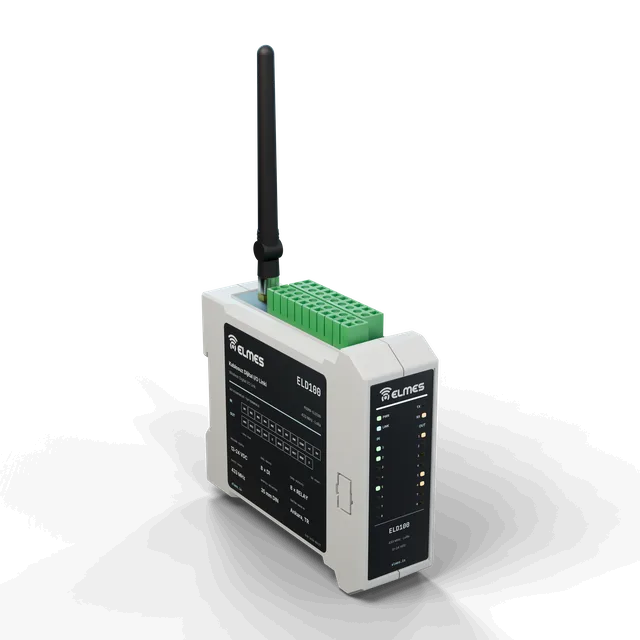 RF & Wireless Systems
Wireless Digital I/O Link — 8 Channels
8 relays, 8 inputs — replace the cable with RF.
View details: Wireless Digital I/O Link — 8 Channels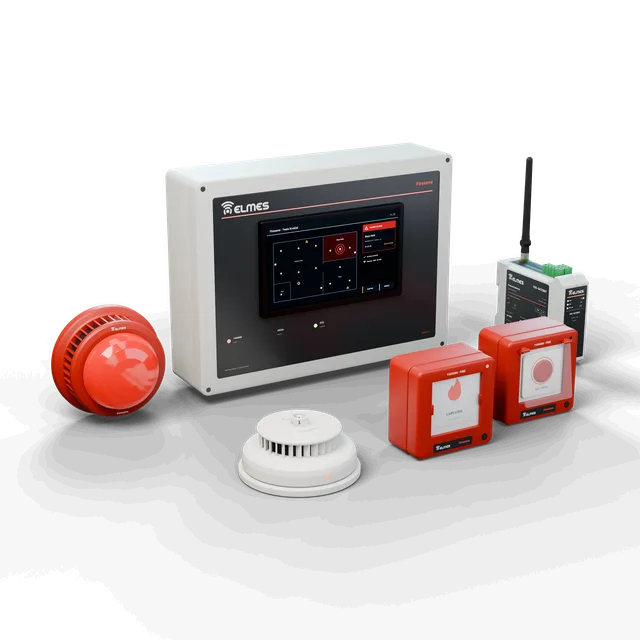 RF & Wireless Systems
Wireless Fire Alarm System (Firesens)
Cable-free, flexible fire detection for industrial sites and sites with special requirements.
View details: Wireless Fire Alarm System (Firesens)